Ulrich Werner · 28 September 2026
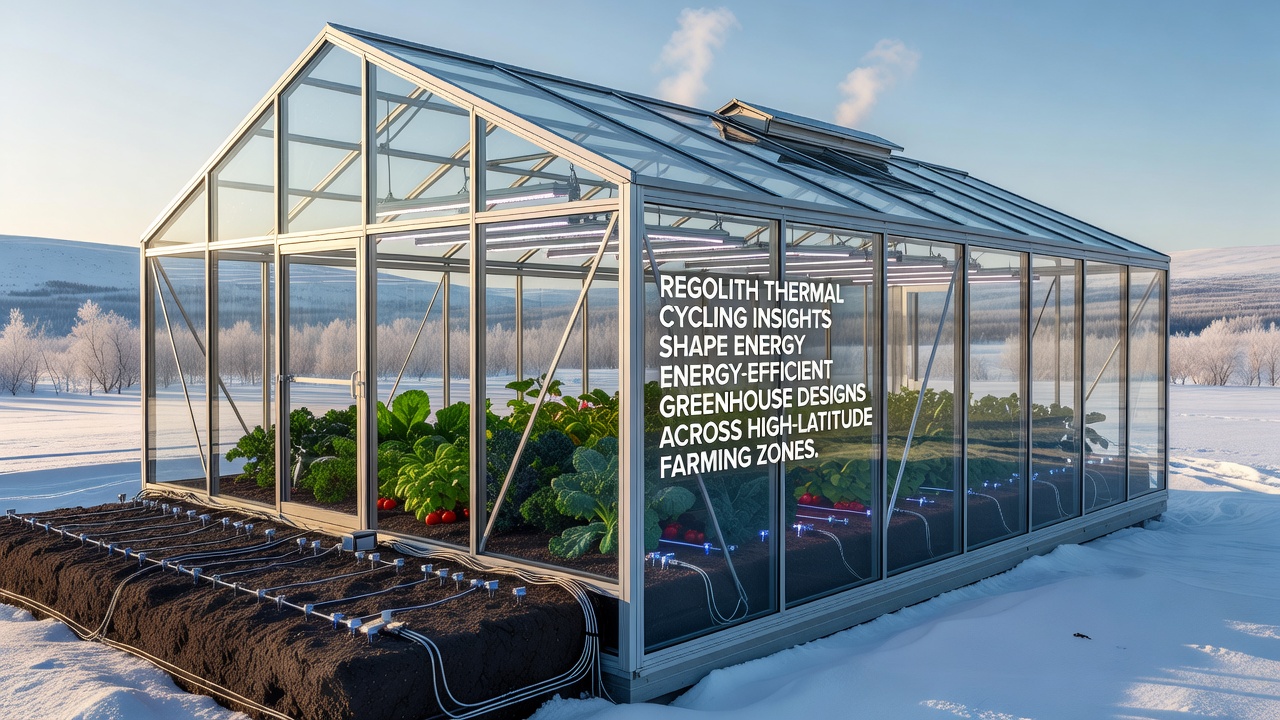
Regolith Thermal Cycling Insights Shape Energy-Efficient Greenhouse Designs Across High-Latitude Farming Zones
Regolith thermal cycling data collected from lunar surface simulations reveals how extreme temperature swings between lunar day and night periods can guide material selection and insulation strategies for greenhouses in high-latitude regions such as northern Canada, Scandinavia, and parts of Russia where winter temperatures often drop below minus thirty degrees Celsius for extended periods. Researchers at various institutions have analyzed these cycles which alternate between roughly one hundred twenty degrees Celsius during daylight exposure and minus one hundred thirty degrees Celsius at night and identified patterns in heat retention adn expansion that translate directly to passive thermal regulation systems on Earth.
Lunar Data Informs Terrestrial Insulation Approaches
Studies from lunar regolith simulants show that fine particle structures in the material trap air pockets which slow heat transfer and this property has prompted engineers to incorporate similar granular layers into greenhouse walls and floors across high-latitude farming zones. Data from missions conducted through 2025 indicates that cycling effects cause measurable compaction and expansion which researchers now replicate in lab settings to test durable composites made from local soils mixed with polymers. Observers note that these tests conducted in facilities mimicking polar conditions produce measurable reductions in energy required for maintaining internal temperatures above fifteen degrees Celsius during peak winter months.
High-Latitude Farming Challenges Drive Material Innovations
Farmers in regions above the sixtieth parallel face limited sunlight for up to six months each year and rely heavily on supplemental heating yet regolith-derived insights have led to multi-layer barriers that capture daytime solar gains and release them gradually overnight. One study revealed that integrating regolith-like aggregates into concrete foundations reduced heat loss by measurable percentages according to field trials in northern Alberta and similar setups in Finnish Lapland. And because these zones experience rapid freeze-thaw cycles each spring the expansion characteristics documented in lunar samples help predict and mitigate cracking in greenhouse structures.
Design Adaptations Emerge from Thermal Cycle Analysis
Engineers apply findings on regolith particle behavior under repeated heating and cooling to develop phase-change materials that absorb excess warmth during brief sunny intervals and redistribute it evenly which proves especially useful in areas like Iceland and the Yukon where temperature swings can exceed twenty degrees Celsius within a single day. Research indicates that such adaptations allow greenhouses to maintain stable microclimates with lower reliance on fossil fuel-based systems and trials scheduled for broader rollout in September 2026 will track performance across multiple sites. What's interesting is how the same data sets used for lunar habitat prototypes now support modular greenhouse frames that expand and contract without compromising seals or insulation integrity.
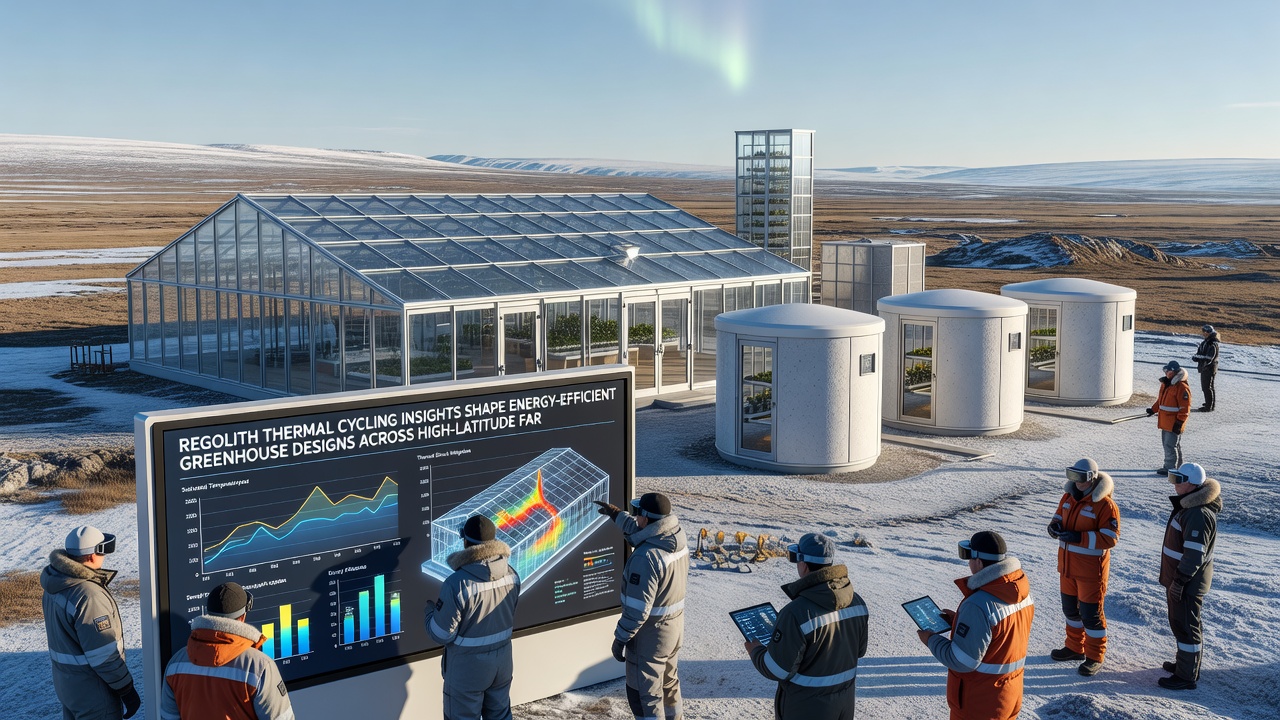
Take one research team that examined simulant bricks formed under vacuum conditions and found their porosity patterns effective at buffering against the prolonged darkness common at high latitudes. These bricks when adapted with local aggregates create floor systems that store geothermal warmth from deeper soil layers and release it upward into growing beds. Data shows such designs cut overall heating demands while supporting year-round vegetable production in locations previously limited to seasonal operations.
Regional Implementation and Supporting Research
Across the European Union agricultural agencies have begun incorporating these principles into pilot projects in northern Sweden where greenhouse operators combine regolith cycling models with wind and solar inputs to achieve net energy reductions. In Canada federal research programs track similar deployments in the Northwest Territories and report consistent improvements in crop yields under controlled thermal environments. NASA lunar regolith studies provide foundational datasets that academic groups in Australia and the United States cross-reference with local climate models to refine greenhouse specifications.
Yet another application involves roof membranes engineered to handle snow loads while reflecting or absorbing radiation based on the reflective properties observed in lunar dust under varying angles of sunlight. Observers note that these membranes extend the effective growing season by several weeks in places like Alaska and Norway without additional mechanical heating.
Conclusion
Regolith thermal cycling research continues to supply quantitative benchmarks for energy modeling software used by greenhouse designers worldwide and ongoing collaborations between space agencies and agricultural institutions ensure that high-latitude zones benefit from these cross-domain findings. As September 2026 approaches expanded field data will further validate how lunar-derived material behaviors translate into practical efficiency gains across diverse cold-climate farming operations.