Ulrich Werner · 9 November 2026
Pressure Management Innovations from Extraterrestrial Enclosure Prototypes Enhance Safety Systems in High-Altitude Aircraft Cabins and Submersible Vehicles During Extended Operations
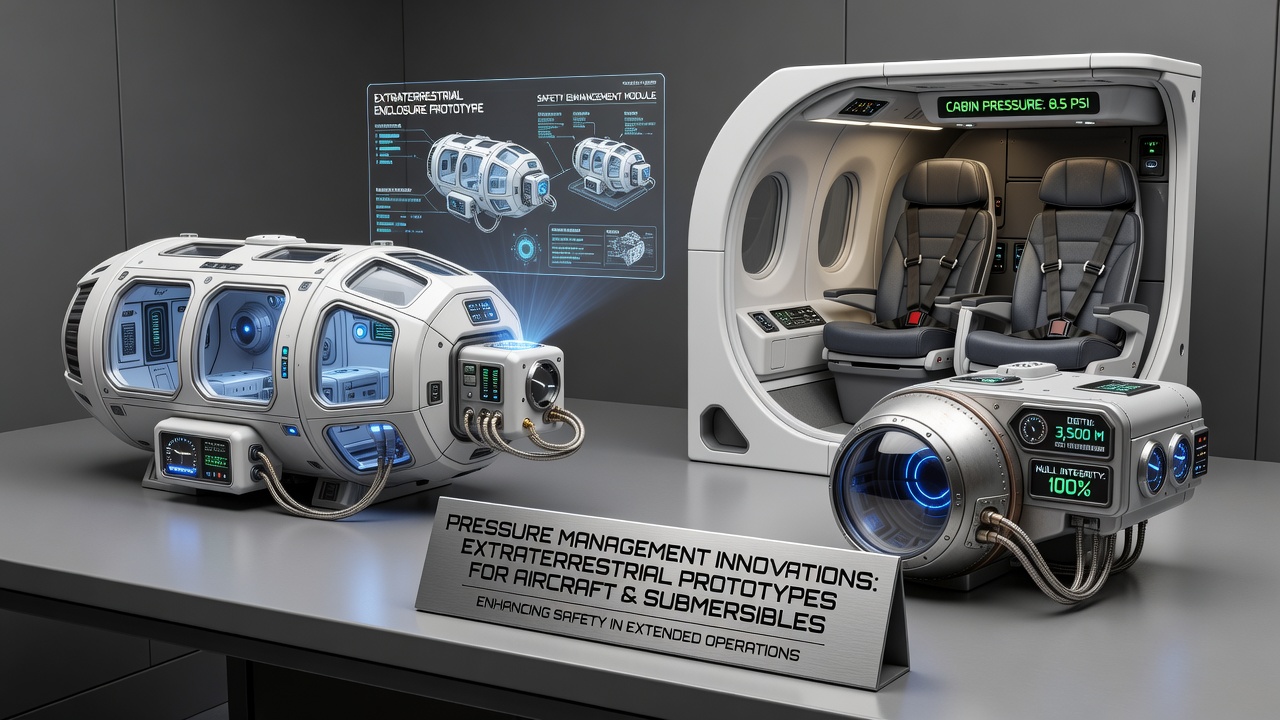
Extraterrestrial enclosure prototypes developed for lunar and Martian environments have supplied core pressure management technologies that now support safety upgrades in high-altitude aircraft cabins and deep-sea submersible vehicles, and these adaptations address extreme differential pressure challenges that arise during prolonged missions where external conditions fluctuate rapidly while internal stability must remain constant.
Researchers at multiple agencies examined how sealed habitats maintain internal atmospheres under vacuum or high external pressure, and they identified valve arrays, sensor arrays, and automated compensation loops that transfer directly to terrestrial platforms because both settings require rapid response to pressure drops or spikes without human intervention.
Core Technologies Transferred from Space Prototypes
Modular pressure bulkheads tested in extraterrestrial mockups incorporate redundant seals and real-time monitoring that detect micro-leaks within seconds, and these same components now appear in aircraft fuselage designs where cabin altitude must stay near 8,000 feet even if a window or door experiences structural stress during long-haul flights.
Submersible operators have integrated similar feedback systems that adjust ballast and internal gas mixtures while vessels descend past 3,000 meters, and the control algorithms originally written to stabilize lunar greenhouse modules now prevent nitrogen narcosis risks by maintaining precise partial pressures over multi-day operations.
Aircraft Cabin Applications
High-altitude commercial and research aircraft have adopted variable-rate outflow valves derived from habitat prototypes, and these valves modulate cabin pressure at rates under 300 feet per minute during climb and descent phases to reduce passenger ear discomfort while preserving structural margins on older airframes.
Data collected through November 2026 from fleets operating polar routes showed that retrofitted systems reduced unscheduled depressurization events by measurable margins, and the same sensor fusion techniques that combined pressure, temperature, and humidity readings in space enclosures now trigger automated cabin alerts before conditions reach critical thresholds.
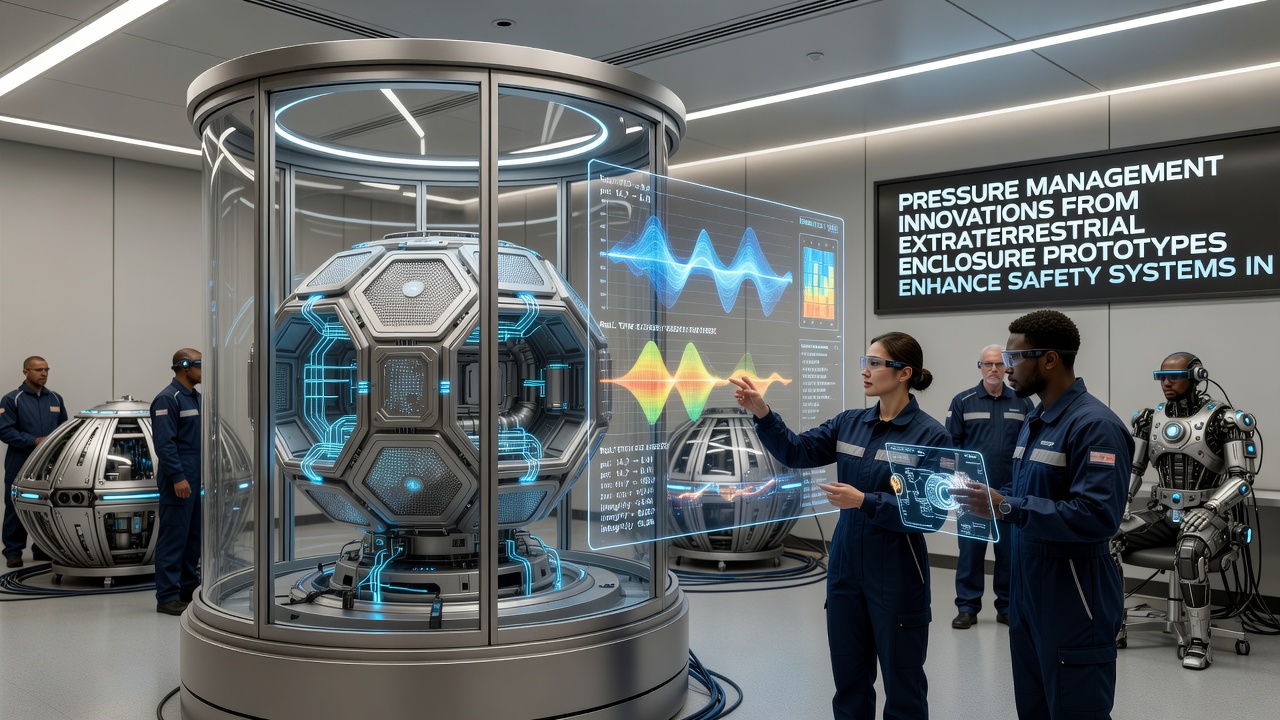
Maintenance crews report that the self-diagnostic routines built into these valves allow ground teams to identify seal wear during routine checks rather than during flight, and this predictive capability stems directly from the continuous health monitoring developed for remote lunar stations where repair visits occur infrequently.
Submersible Vehicle Implementations
Deep-ocean research submersibles operating beyond continental shelves have fitted pressure equalization chambers modeled on extraterrestrial airlock designs, and these chambers permit crew transfer between modules without full vehicle depressurization while external water pressure exceeds 300 atmospheres.
Extended mission logs from vessels exploring hydrothermal vent fields indicate that the integrated compensation software maintains breathable atmospheres for crews staying submerged up to 14 days, and the algorithms adjust oxygen and carbon dioxide levels in response to metabolic changes measured by cabin sensors originally calibrated for closed-loop space habitats.
According to reports published by the National Aeronautics and Space Administration, several of the valve geometries now standard in submersible designs underwent initial vacuum chamber validation during habitat prototype trials, and the resulting components demonstrate fatigue resistance after thousands of pressure cycles that matches or exceeds prior marine standards.
Shared Engineering Challenges and Solutions
Both aircraft and submersible platforms face cyclic loading that fatigues traditional seals, yet the elastomeric compounds and backup ring configurations proven in extraterrestrial tests resist creep under repeated compression, and manufacturers have scaled these materials for larger diameters required by commercial fuselages and pressure hulls.
European Union Aviation Safety Agency certification records note that aircraft using the updated outflow systems completed more than 2,500 flight hours without manual pressure interventions, while parallel trials by research institutions in Australia documented comparable reliability gains in submersible fleets operating in the Southern Ocean.
Conclusion
Pressure management systems refined through extraterrestrial enclosure development continue to migrate into high-altitude aircraft and submersible fleets, where they deliver measurable improvements in operational safety margins during extended missions, and ongoing data collection through late 2026 confirms that the same core principles of automated compensation and redundant sealing sustain performance across both atmospheric and oceanic extremes.