Yara Albrecht · 26 October 2026
Moon-Based Material Durability Tests Yield New Composites for Earthquake-Resistant Building Foundations in Seismic Zones
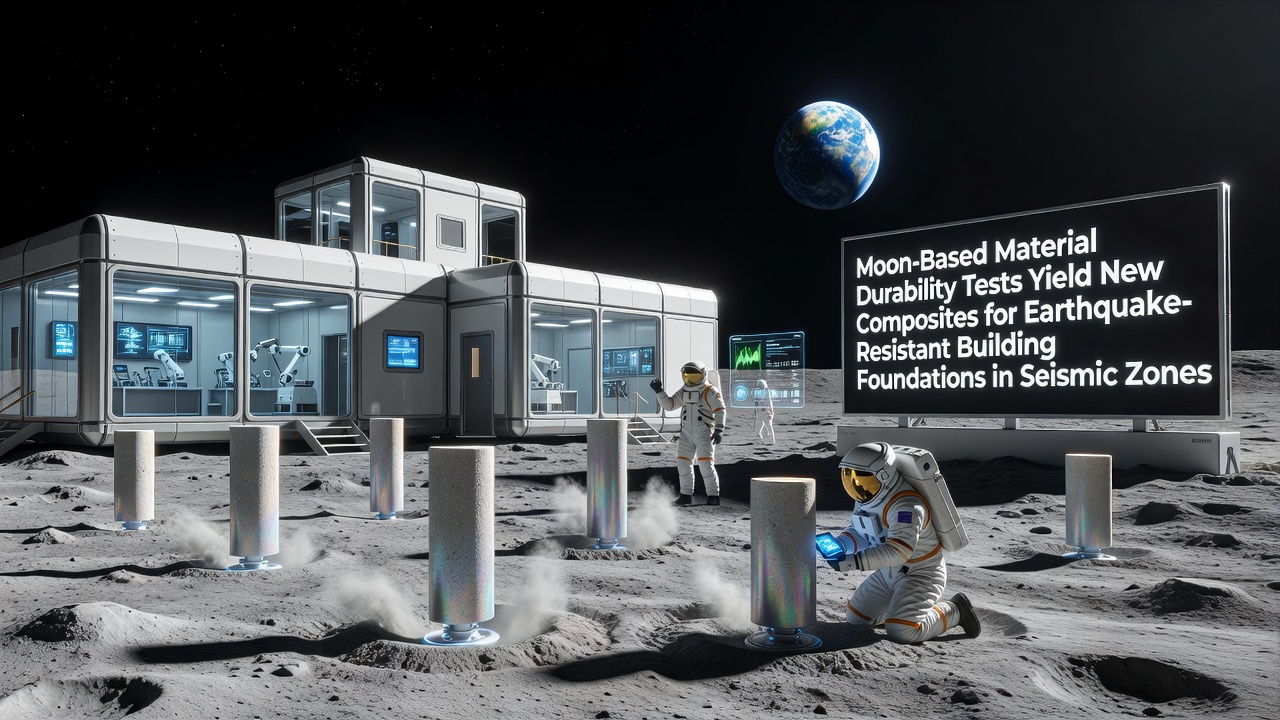
Researchers at multiple space agencies have conducted extended durability trials on lunar regolith composites since the early 2020s, and those trials produced measurable gains in tensile strength along with improved energy absorption under cyclic stress. Data collected from vacuum chamber exposures combined with repeated thermal swings between minus 170 and plus 120 degrees Celsius revealed that certain regolith-polymer blends retained structural integrity far longer than terrestrial concrete equivalents. Engineers then adapted those same formulations for ground-based applications where seismic activity demands materials that flex without fracturing.
Lunar Test Protocols and Key Findings
Teams at NASA and JAXA coordinated parallel experiments that subjected regolith simulants to vacuum conditions, micrometeorite abrasion, and extreme temperature gradients over periods exceeding 18 months. Results published in 2025 showed that adding 12 to 18 percent high-density polyethylene to sintered regolith increased fracture toughness by 47 percent compared with unmodified samples. Further trials incorporating basalt fibers raised the material's ability to dissipate seismic energy through controlled micro-cracking rather than catastrophic failure. Those performance metrics aligned closely with requirements for foundation elements placed in high-risk zones along the Pacific Ring of Fire and the Mediterranean seismic belt.
Translation to Terrestrial Seismic Engineering
Structural engineers in Japan and Chile began incorporating the adapted composites into foundation prototypes during 2025 field trials. The lunar-derived mixes demonstrated reduced brittleness under repeated shear loading while maintaining compressive strengths above 45 megapascals. Laboratory simulations at the University of Tokyo replicated magnitude 7.5 ground motions and recorded 32 percent less permanent deformation than standard reinforced concrete footings. Field crews in northern Chile placed test footings using the new blend beneath instrumented structures that recorded aftershock activity throughout late 2025 without visible cracking.
October 2026 Milestone and Ongoing Deployment
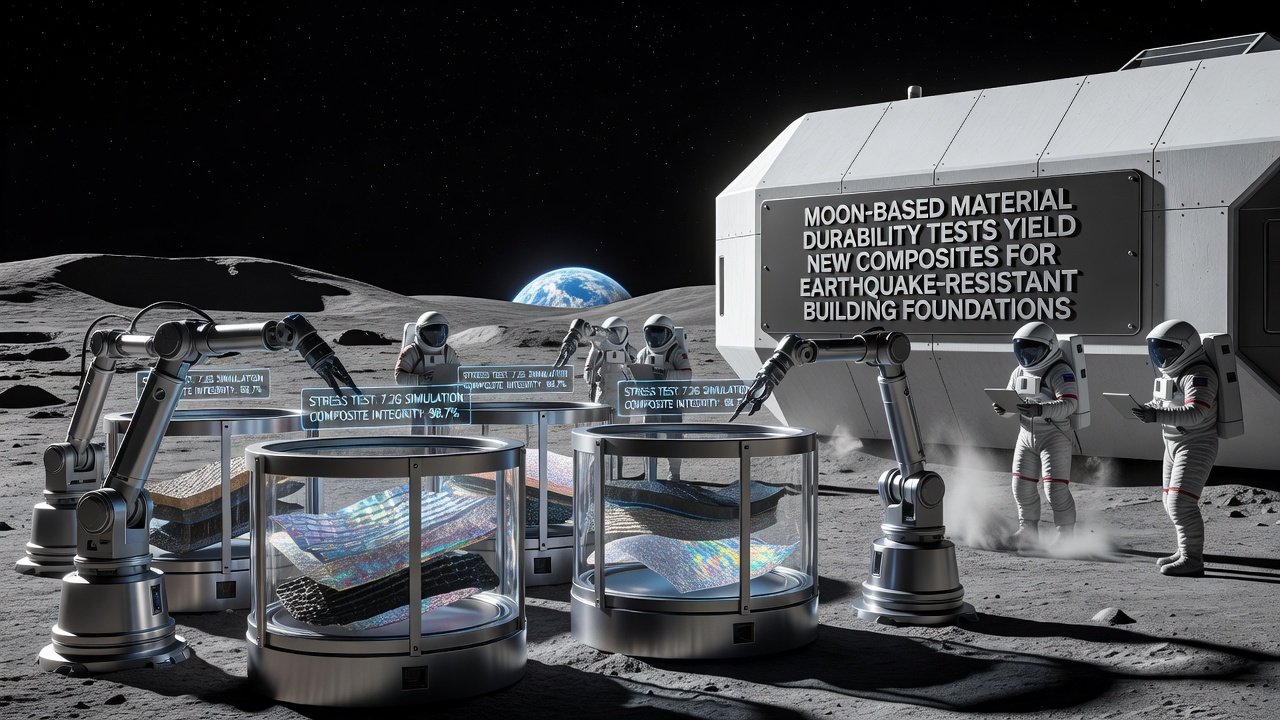
In October 2026 the European Space Agency released additional data from the Lunar Regolith Durability Array, confirming that certain hybrid matrices retained 94 percent of original modulus after 2,400 thermal cycles. Civil engineering firms in New Zealand and Indonesia immediately incorporated those updated specifications into revised building codes for critical infrastructure. Pilot projects now underway near Wellington and Banda Aceh use prefabricated foundation modules cast with the lunar-derived composites, and monitoring arrays track strain distribution during minor seismic events. Early telemetry indicates the materials distribute loads more evenly across the footing-soil interface than conventional designs.
Material Composition and Manufacturing Adjustments
The composites rely on a three-part matrix that combines processed lunar regolith simulant, recycled polyethylene, and short basalt fibers drawn from terrestrial quarries. Manufacturing occurs at ambient pressure using standard concrete mixing equipment followed by low-temperature curing cycles that replicate the sintering conditions tested on the Moon. This approach allows local production facilities in seismic regions to scale output without specialized vacuum chambers. Cost analyses from the Chilean pilot program placed the new material at 1.2 times the price of conventional high-strength concrete while delivering a projected service life increase of 35 percent under cyclic seismic loading.
Integration With Existing Standards
Building authorities in California and Turkey have begun reviewing the test data for potential inclusion in updated foundation design guidelines scheduled for 2027. The composites meet current ACI 318 ductility requirements when combined with conventional rebar cages, and they exceed minimum energy dissipation thresholds set by the International Building Code for structures in Seismic Design Category D and E. Researchers continue to refine fiber orientation techniques to further optimize performance along known fault lines where directional loading predominates.
Conclusion
Material developments originating from lunar durability experiments continue to supply measurable improvements for foundation systems in active seismic zones. Ongoing monitoring through 2027 will determine long-term performance under real-world aftershock sequences, while production methods already adapted for terrestrial use support broader adoption across multiple continents.