Yara Albrecht · 14 September 2026
Dome Principles from Lunar Research Facilities: Engineering Self-Sustaining Habitats for Extreme Terrestrial Conditions
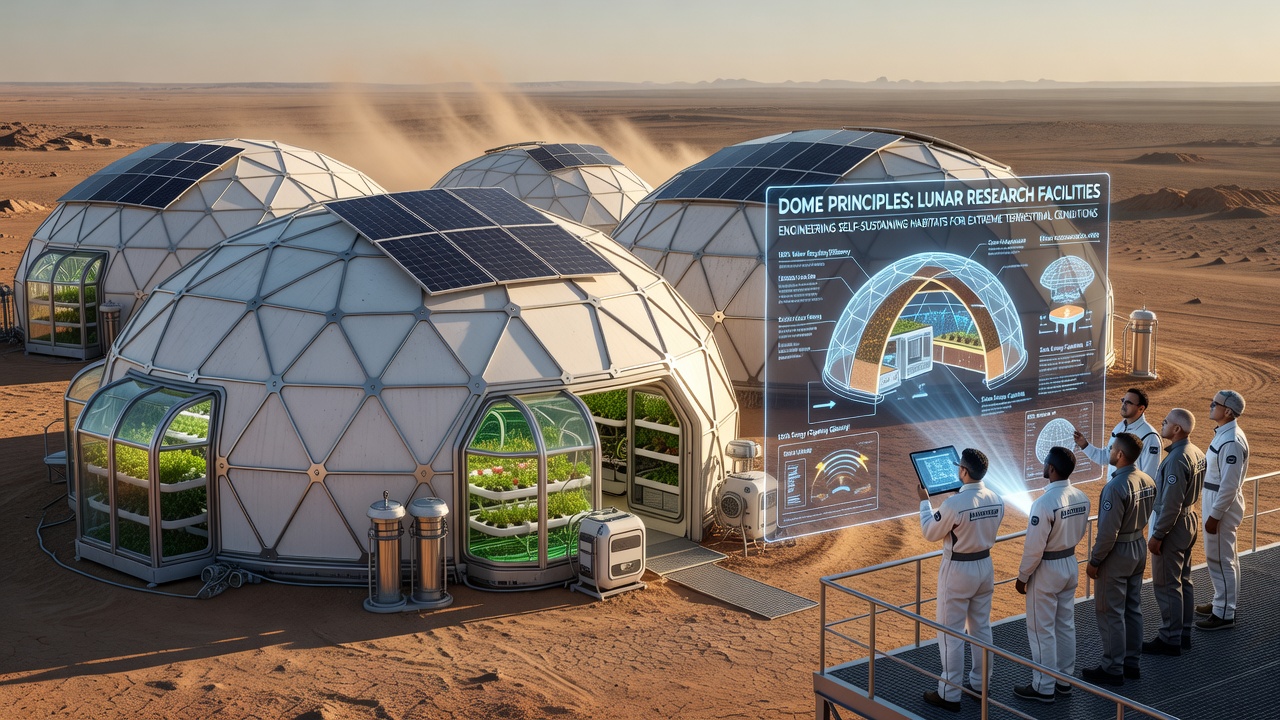
Engineers have drawn core concepts from lunar research facilities to design self-sustaining domes that function in Earth's most demanding settings, including polar ice fields, arid deserts, and high-altitude plateaus, while closed-loop systems recycle air, water, and waste much as they would on the Moon. These principles emerged from decades of habitat simulations that tested structural integrity under vacuum conditions, temperature extremes, and limited resupply scenarios, and researchers adapted the same frameworks for terrestrial use where external support remains scarce or impossible.
Foundations in Lunar Habitat Research
Lunar programs emphasized multilayered shielding against radiation and micrometeorites, yet those same layering techniques now protect domes against ultraviolet exposure and abrasive sandstorms in desert regions, whereas inflatable modules tested for lunar transport allow rapid deployment in remote Arctic outposts where traditional construction faces seasonal constraints. Data from early habitat prototypes revealed that integrated hydroponic arrays and atmospheric processors maintain stable internal conditions even when external temperatures swing by more than 80 degrees Celsius, and teams have replicated those arrays in facilities located in northern Canada and the Australian outback.
Core Engineering Principles
Structural redundancy forms the first principle, with domes incorporating redundant pressure seals and backup power loops that switch automatically during failures, while material selection prioritizes composites that resist corrosion in saline coastal zones and thermal fatigue in permafrost zones. Resource autonomy follows closely, requiring every habitat to generate at least 90 percent of its water and oxygen through regenerative processes such as electrolysis and condensation capture, and power systems rely on hybrid solar and geothermal inputs that operate continuously regardless of seasonal daylight variations. Thermal management systems distribute heat through phase-change materials and variable-conductance loops, and these same mechanisms now stabilize interior climates inside domes placed near the Dead Sea and in Siberian mining camps.
Adaptation to Terrestrial Extreme Environments
Observers note that Antarctic research stations began testing lunar-derived dome geometries in the 2020s because the curved shells shed heavy snow loads more effectively than rectangular buildings, and the same geometry reduces wind resistance during desert sandstorms. In September 2026 the International Extreme Environment Habitat Conference will release comparative performance metrics from five operational sites that have operated under lunar-derived protocols for at least 18 months, and preliminary figures indicate energy self-sufficiency rates exceeding 85 percent at three of those locations. Canadian and Norwegian teams have further modified airlock designs originally intended for lunar dust mitigation so that they now exclude blowing snow and ice crystals without compromising crew egress times.
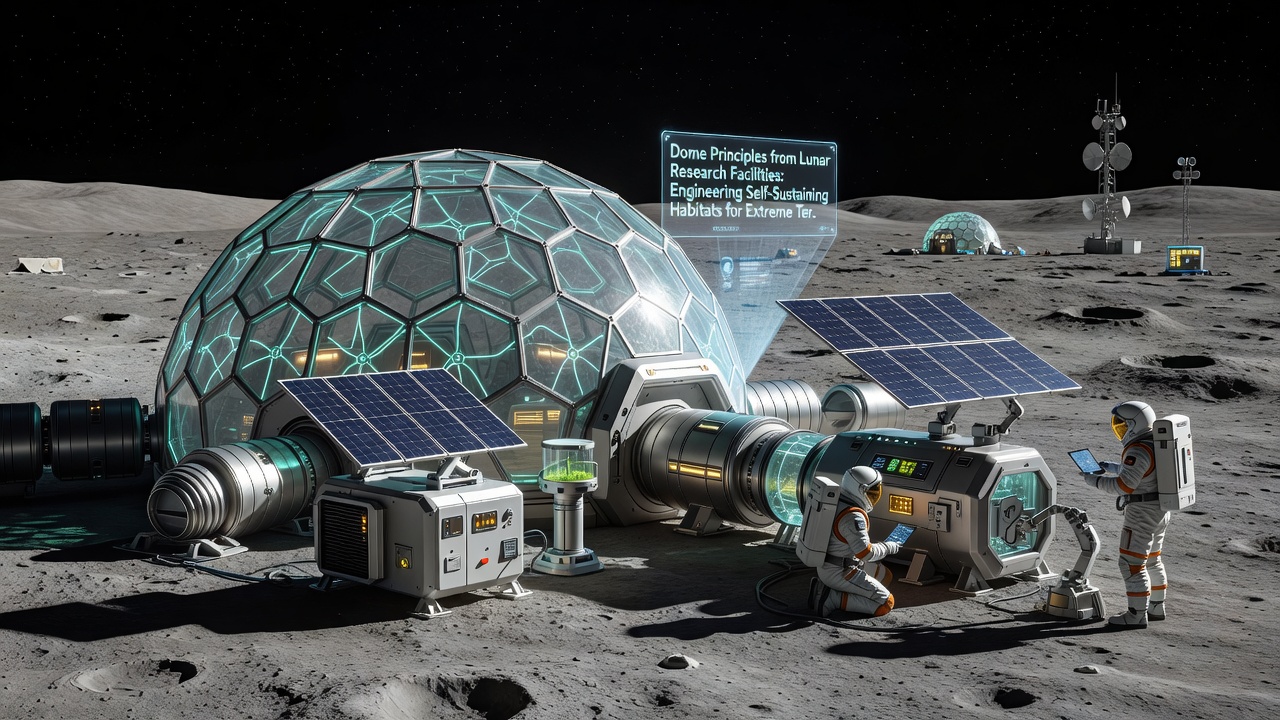
Food production modules rely on stacked aeroponic trays that consume minimal water yet deliver consistent yields, and these trays now operate inside domes situated on the Tibetan plateau where soil degradation and short growing seasons previously limited agriculture. Waste processing units convert organic refuse into fertilizer and biogas, closing the nutrient cycle in exactly the manner lunar planners required, and field reports from facilities in Iceland confirm that methane output meets 40 percent of on-site heating demand during winter months.
Structural and Environmental Monitoring
Sensor networks embedded within dome walls track micro-fractures, humidity gradients, and gas concentrations in real time, feeding data to predictive algorithms that schedule maintenance before failures occur, while the same networks originated in lunar test beds where communication delays demanded fully autonomous fault detection. External link integration with NASA closed-loop life support studies supplies updated models for carbon dioxide scrubbing that have been recalibrated for higher terrestrial humidity levels. European researchers working through the European Space Agency have contributed complementary data on radiation shielding composites that now appear in domes located above 4,000 meters in the Andes.
Case Applications and Performance Data
One installation in the Namib Desert maintains internal temperatures between 18 and 24 degrees Celsius year-round despite external peaks above 45 degrees, and its water recovery rate averages 92 percent according to quarterly audits. Another site on Ellesmere Island has sustained a six-person crew through 11 months of continuous darkness using only stored solar energy and geothermal supplementation, and structural inspections after two winters revealed no measurable deformation in the composite shell. Observers tracking these projects report that construction time for each dome averages 11 weeks once foundations are prepared, a timeline made possible by prefabricated panel systems first validated during lunar analog missions in Hawaii.
Future Developments and Integration
Upcoming expansions will incorporate robotic assembly arms that erect additional modules without human exposure to extreme surface conditions, and planners intend to link multiple domes into clustered networks that share power and water reserves across sites. Academic teams from Australian and South African universities continue to publish joint findings on microbial communities inside closed ecosystems, and those findings refine filtration protocols used in both lunar prototypes and terrestrial installations. Regulatory frameworks in several countries now reference lunar-derived standards when issuing permits for remote habitat construction, and this convergence accelerates technology transfer between space agencies and national environmental ministries.
Conclusion
The transfer of dome principles from lunar research facilities continues to reshape engineering approaches for self-sustaining habitats on Earth, and documented performance at existing sites demonstrates that closed-loop systems, redundant structures, and autonomous monitoring deliver reliable operation across diverse extreme environments. As additional data accumulate through 2026 and beyond, integration of these methods into broader infrastructure planning appears increasingly practical for regions facing resource scarcity or climate-driven challenges.